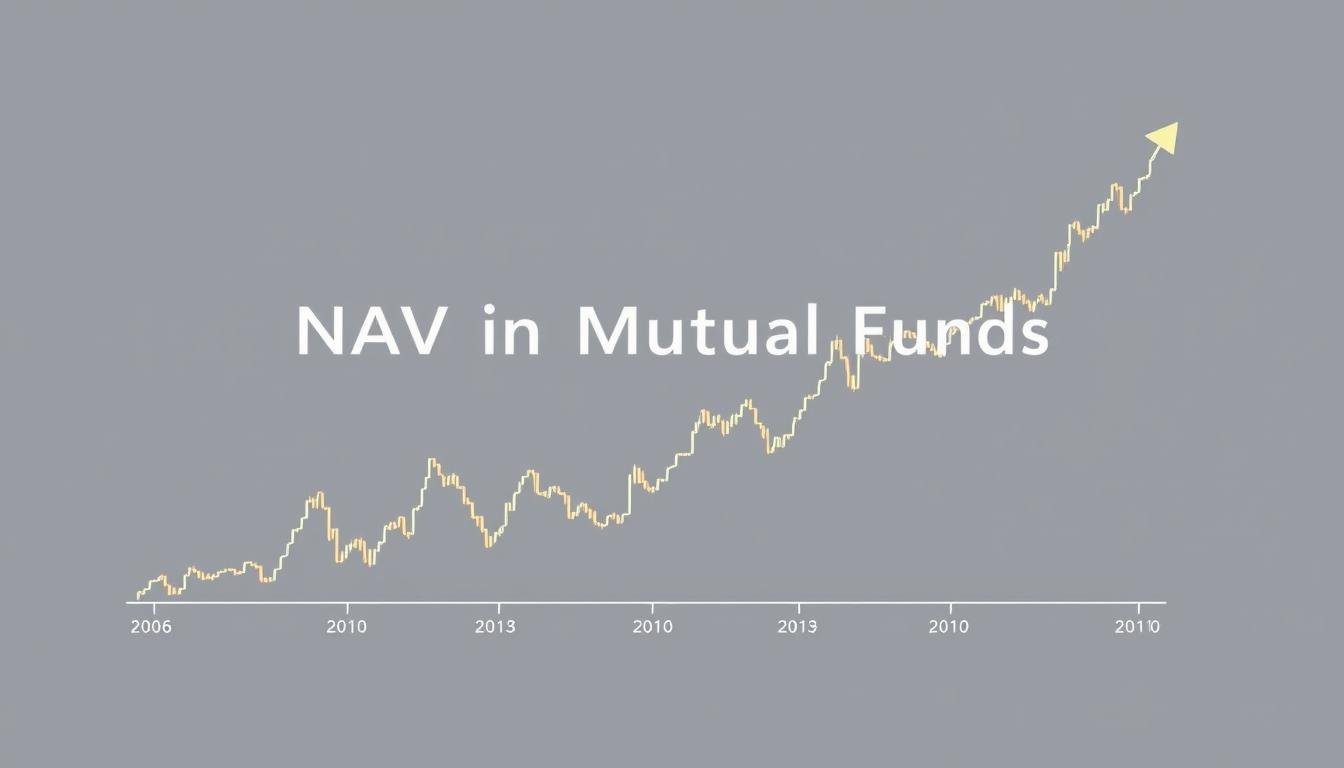
Investing in mutual funds can be a great way to diversify your portfolio, but it’s essential to understand the key concepts that drive their value. One crucial aspect is the Net Asset Value (NAV), which represents the total value of the fund’s assets minus its liabilities, divided by the number of outstanding shares.

The NAV meaning is vital for investors, as it helps in making informed decisions. By understanding how NAV is calculated and its significance, investors can better navigate the world of mutual fund investing.
Key Takeaways
- NAV represents the total value of a mutual fund’s assets minus its liabilities.
- Understanding NAV is crucial for making informed investment decisions.
- NAV helps investors evaluate the performance of their mutual fund investments.
- Mutual fund NAV is calculated by dividing the total net assets by the number of outstanding shares.
- NAV is an essential metric for investors to consider when investing in mutual funds.
Understanding NAV in Mutual Funds
To grasp the concept of NAV in mutual funds, it’s essential to understand its definition and calculation. NAV, or Net Asset Value, represents the total value of the securities held in a mutual fund, minus its liabilities, divided by the number of outstanding shares.
Definition and Basic Concept
The Net Asset Value (NAV) is a snapshot of a mutual fund’s value at a particular point in time. It’s calculated at the end of each trading day, based on the closing prices of the securities in the fund’s portfolio. This value gives investors an idea of the fund’s performance and helps them make informed decisions.
The NAV is typically expressed per share, making it easier for investors to understand the value of their investment. For instance, if a mutual fund has a NAV of $20, it means that each share of the fund is worth $20.
How NAV is Calculated
The calculation of NAV involves several steps. First, the total value of the securities in the fund’s portfolio is determined by multiplying the number of shares held by the closing price of each security. Then, the fund’s liabilities, such as operating expenses and management fees, are subtracted from this total value.
The resulting value is then divided by the number of outstanding shares to arrive at the NAV per share. This process is repeated daily to reflect the changing market values of the securities held by the fund.
For example, if a mutual fund holds 1000 shares of a particular stock with a closing price of $50, the total value of that stock in the fund’s portfolio would be $50,000. After accounting for all securities and liabilities, the NAV is calculated to provide a comprehensive picture of the fund’s value.
What is NAV in Mutual Funds and Why It Matters
Understanding the significance of NAV in mutual funds is crucial for making informed investment decisions. NAV, or Net Asset Value, represents the total value of the assets in a mutual fund minus its liabilities, divided by the number of outstanding shares.
The NAV is calculated at the end of each trading day, providing a snapshot of the fund’s value. It is a critical metric that helps investors understand the performance of their investments.
NAV vs. Share Price: Key Differences
One common point of confusion among investors is the difference between NAV and share price. While NAV reflects the underlying value of a mutual fund, the share price can be influenced by various market and economic factors.
Key differences between NAV and share price include:
- NAV is calculated based on the fund’s net assets, whereas share price is determined by market forces.
- NAV remains consistent across all transactions within a trading day, whereas share price can fluctuate throughout the day.
| Characteristics | NAV | Share Price |
|---|---|---|
| Calculation Basis | Net assets divided by outstanding shares | Market demand and supply |
| Fluctuation | Changes daily based on net asset value | Can fluctuate throughout the trading day |
“The NAV of a mutual fund is akin to the book value of the fund, while the market price can be seen as its market value, influenced by investor sentiment and market conditions.”
NAV as a Performance Indicator
NAV serves as a crucial performance indicator for mutual funds. By tracking changes in NAV over time, investors can assess the fund’s performance and make informed decisions about their investments.
Factors that influence NAV include:
- The overall performance of the securities within the fund’s portfolio.
- Changes in the value of the fund’s assets and liabilities.
- Expenses and fees associated with managing the fund.

By understanding NAV and its implications, investors can better navigate the complexities of mutual fund investments and make more informed decisions.
How NAV Impacts Your Investment Decisions
When it comes to investing in mutual funds, grasping the impact of NAV on your decisions can be a game-changer. The Net Asset Value (NAV) is more than just a number; it’s a crucial indicator that can influence your investment strategy.
Timing Your Purchases and Redemptions
The NAV of a mutual fund can significantly affect the timing of your purchases and redemptions. Investors often consider the NAV when deciding to buy or sell mutual fund shares. However, it’s essential to understand that NAV alone doesn’t dictate the timing of these transactions; other factors like investment goals and market conditions also play a significant role.
For instance, a lower NAV might make a mutual fund appear more attractive, but it doesn’t necessarily mean it’s a good time to invest. Conversely, a high NAV doesn’t always indicate a bad time to invest. It’s crucial to consider the fund’s performance, your financial goals, and the overall market conditions.
Key Considerations for Timing:
- Investment goals and risk tolerance
- Market conditions and economic outlook
- Fund performance and historical data
NAV Fluctuations and Market Conditions
NAV fluctuations are closely tied to market conditions. As the value of the securities in the mutual fund’s portfolio changes, so does the NAV. Understanding these fluctuations can help investors make more informed decisions.
| Market Condition | Impact on NAV | Investor Action |
|---|---|---|
| Bull Market | NAV tends to increase | Consider long-term holding or investing |
| Bear Market | NAV tends to decrease | Consider holding or redeeming based on investment goals |
“The key to successful investing is not about timing the market but time in the market.” –
John Bogle
Common Misconceptions About NAV
There are several misconceptions about NAV that investors should be aware of. One common myth is that a low NAV is cheaper and thus more attractive. However, the NAV does not directly impact the cost of investing in a mutual fund; it’s the fund’s performance and fees that matter.
Another misconception is that NAV directly correlates with the fund’s performance. While NAV can provide insights into a fund’s value, it doesn’t tell the whole story. Investors should look beyond NAV to factors like the fund’s investment strategy, management fees, and historical performance.

Understanding the true meaning and importance of NAV can empower investors to make more informed decisions. By considering NAV in the context of overall market conditions and investment goals, investors can navigate the complexities of mutual fund investing with greater confidence.
Conclusion
NAV, or Net Asset Value, is a fundamental concept in mutual fund investing, offering insights into a fund’s value and performance. By grasping the concept of mutual fund NAV, investors can make more informed decisions, aligning their investments with their financial goals.
The calculation and fluctuations of NAV provide valuable information about a fund’s performance and market conditions. Investors can use this information to time their purchases and redemptions effectively, making the most of their investment opportunities.
In essence, understanding mutual fund NAV is crucial for investors seeking to optimize their investment strategies. By staying informed about NAV and its implications, investors can navigate the complexities of the market with confidence.
FAQ
What is NAV in mutual funds?
NAV, or Net Asset Value, represents the total value of a mutual fund’s assets minus its liabilities, divided by the number of outstanding shares. It’s a critical metric for understanding a fund’s value.
How is NAV calculated?
NAV is calculated at the end of each trading day, based on the closing prices of the securities in the fund’s portfolio. This provides a snapshot of the fund’s value at a particular point in time.
What is the difference between NAV and share price?
While NAV reflects the underlying value of a mutual fund, the market price or share price can be influenced by various factors, including supply and demand. NAV is a more accurate representation of a fund’s intrinsic value.
How does NAV impact investment decisions?
NAV influences investment decisions, including timing purchases and redemptions. However, it’s essential to consider other factors like investment goals and market conditions, as NAV alone doesn’t dictate the timing of transactions.
What causes NAV fluctuations?
NAV fluctuations are caused by changes in the value of the securities in the fund’s portfolio, which can be influenced by market conditions, economic trends, and other factors.
Is a higher NAV better?
Not necessarily. A higher NAV doesn’t always indicate better performance. It’s essential to evaluate a fund’s performance over time, considering factors like returns, fees, and investment objectives.
Can I time my purchases and redemptions based on NAV?
While NAV can be a consideration, it’s not the only factor to consider when timing purchases and redemptions. Investors should also consider their investment goals, risk tolerance, and market conditions.
How often is NAV calculated?
NAV is typically calculated at the end of each trading day, providing investors with a daily snapshot of their fund’s value.